

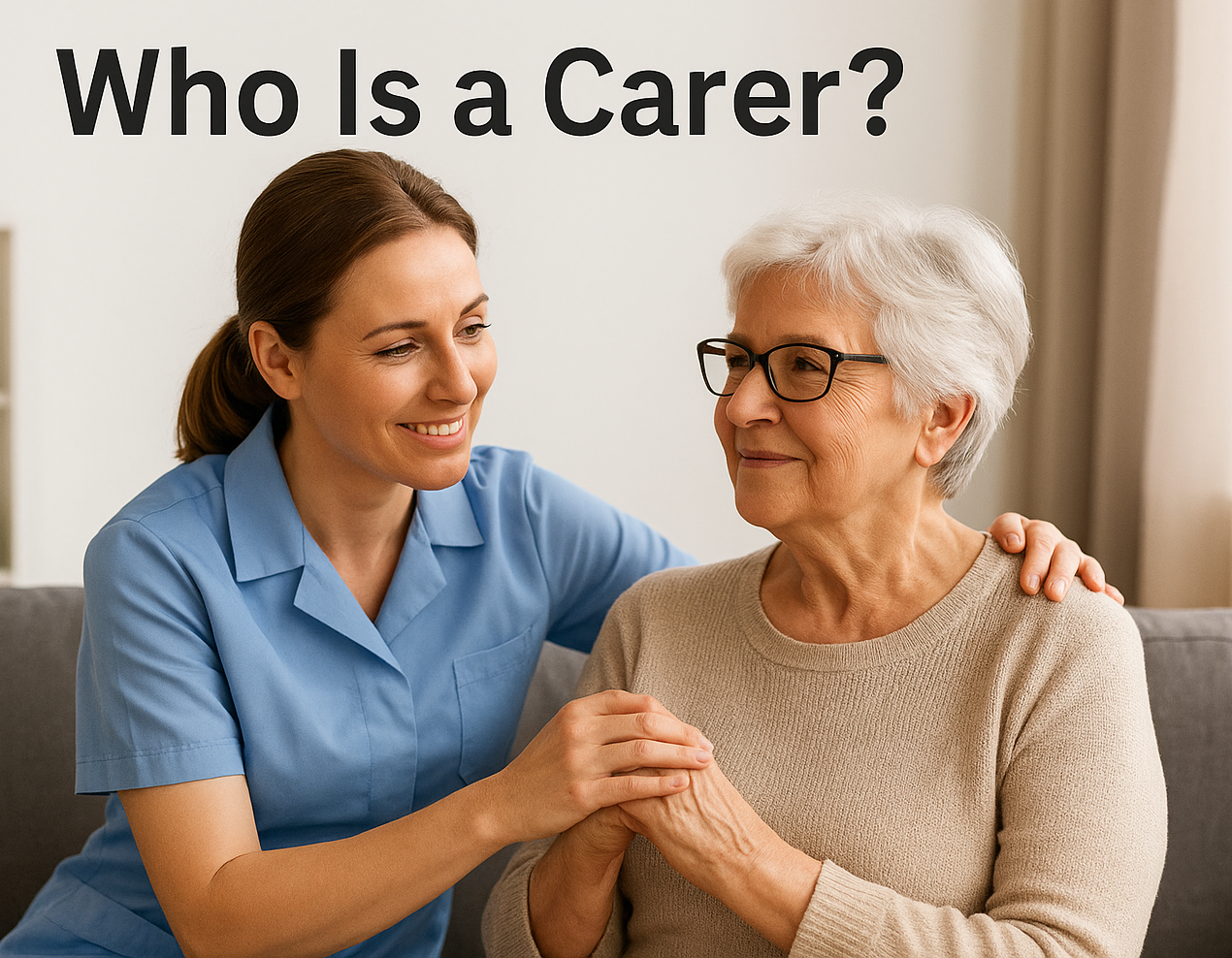
A carer, also known as a caregiver, is someone who provides unpaid or paid support to a person who cannot manage daily tasks independently. In the UK, carers play a vital role in supporting individuals living with disability, long-term illness, age-related conditions, mental health issues, or recovery after surgery. Carers may be family members, friends, neighbours, or trained professional care workers, all of whom contribute to the UK’s wider health and social care system. Who is a carer?
Understanding what a carer is helps individuals, families, and healthcare providers ensure that the right care and support are in place.
What Does a Carer Do? Key Responsibilities
Carers help people remain safe, healthy, and independent. Common carer responsibilities include:
- Personal care: washing, dressing, toileting, grooming
- Domestic support: meal preparation, cleaning, shopping
- Medication prompts and basic health monitoring
- Mobility assistance and use of mobility aids
- Companionship and emotional support
- Transport to GP appointments, hospital visits, and community activities
- Advocacy when dealing with NHS or social services
Professional carers may also provide dementia care, palliative care, disability support, and reablement services.
Different Types of Carers in the UK
Unpaid Carers (Informal Carers) : Unpaid carers provide care for family, partners, or friends. They form one of the largest parts of the UK’s care system and may be eligible for a Carer’s Assessment or Carer’s Allowance.
Professional Carers : These are trained care workers employed by care agencies, the NHS, private care providers, or care homes. They deliver regulated, high-quality support.
Young Carers: Children and young people under 18 who help support a parent or sibling due to illness, disability, or addiction.
Volunteer Carers / Community Carers : Volunteers offering social and emotional support through community groups, charities, and local services.
Why Carers Are Essential in UK Healthcare
Carers especially unpaid carers play a central role in reducing pressure on the NHS, enabling people to stay at home rather than requiring residential or hospital care. Their contribution helps:
- Improve patient wellbeing and independence
- Reduce hospital admissions
- Support long-term health conditions
- Provide continuity of care at home
- Strengthen community health and social care systems
Without carers, the UK healthcare system would face significantly higher demand and reduced capacity.
Support and Benefits Available for Carers in the UK
Caring can be emotionally and physically demanding. The UK offers a range of carer support services, including:
- Carer’s Assessment (via the local council)
- Carer’s Allowance
- Respite care and short breaks
- Training and resources for carers
- Local and national carer support groups
- NHS information and guidance for carers
- Flexible working rights for employed carers
Accessing these services helps carers maintain their own health and financial stability while continuing to support their loved ones.
Conclusion
A carer is someone who provides essential support to another person due to illness, disability, or age. In the UK, carers are the backbone of the health and social care system—ensuring individuals receive the dignity, independence, and wellbeing they deserve. Understanding who a carer is and accessing the right support can make a meaningful difference to both carers and the people they look after.
Leave a Reply